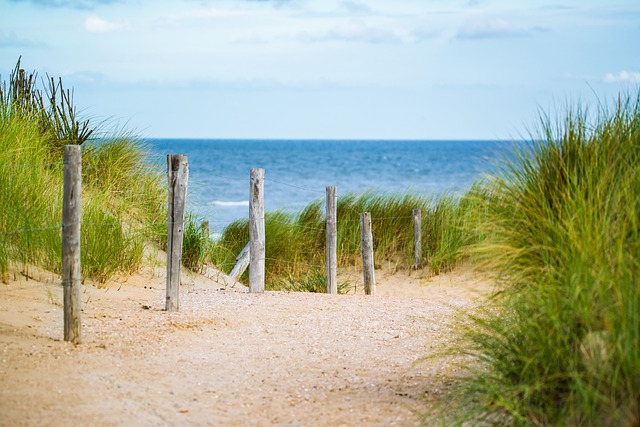
When I finally left the forest, it took me a year, or so, of sobering up to feel adequately well enough to commence my education. The tertiary preparation course that I embarked on was quite the journey. I really hadn’t had much of an education before it, and I was truly beginning from the bottom in terms of my literacy, numeracy, and self-confidence. Lack of the latter was made even more difficult by the friendliness of some of the students. “Hey, Gregory. Where about do you live?” This question felt terribly invasive as the truth separated me from everyone else. I had no intention of answering specifically, lest I’d give myself away. “Over by the sand dunes,” I’d reply, before quickly shining the spotlight back onto them.
Over by the sand dunes, would have been more correctly stated, “I live in the sand dunes near Southport beach”. In fact, those sand dunes served as a place to rest right up until I was halfway through my undergrad at university.
A couple of days ago, news.com.au published an article titled, ‘Working homeless’ targeted by new sign erected at beach carpark. The term, ‘working homeless’ is sad enough as it speaks to a new territory in Australian living standards that has slid farther south from the breadline and has fast become the trifecta of modern impoverished living: working, poor, and homeless.
Once again, we are told that a local council, this time The Northern Beaches of Sydney, are doing their level best to “move on” the homeless and those rough sleeping in their cars. It appears that the Mona Vale beach carpark has a newly erected sign prohibiting would-be offenders. Amongst the countless stories regarding local councils and their deplorable behavior towards their own rough sleeping community, not once has a council ever addressed the burning question; where should these people move on to?
It is fair to say that people who have choices don’t end up rough sleeping. These people, in general, already have their backs against the wall and this has been well documented by the Australian Housing and Urban Research Institute along with the many service providers who address social housing issues. And yet, signs like the newly erected one at Mona Vale beach carpark, continue to appear. Placed in an area known to host a community of rough sleepers, the sign reads, “No camping or over-night stays.”
I see several silent and ill-informed assumptions luminating from this white, red and purple warning. Number 1. People rough sleeping are to blame for their circumstance 2. People rough sleeping just need to try harder 3. People rough sleeping have caused their own pain 4. People rough sleeping are out to cause trouble. 5. People rough sleeping – are they actually people, anyway?
Let’s examine the list..
1. The term ‘working homeless’, is an interesting change in the profile of Australian rough sleepers, and those considered homeless, and it exposes a confronting truth; the evolving face of homelessness, looks more and more like me and you. In 2017, Mission Australia represented a figure of 30% of the population who were at risk of becoming homeless with only a buffer of 6 pay days between them and “nowhere to go”. Fast forward 6 years and the issues aren’t improving.
The Australian Homelessness Monitor 2022, released a report in December 2022, finding that that the average monthly number of people using homelessness services increased by 8% in the four years to 2021-22. That’s double the population growth rate over that period. These statistics indicate a trend driven by something far greater than bad personal choices, alone.
2. In Australia, the assumption that homeless people need to try harder, and the ensuing disdain for people who are clearly not “having a go”, has it’s origins reaching way back to a publication written by Donald Horne, in 1964. “The Lucky Country,” as Horne’s book was titled, was not actually a term of gratitude, or even smugness, rather, the position that Horne argued was that Australia was “a lucky country run mainly by second rate people who share its luck.” Ouch! However, being an opportunistic bunch of second raters, we Australians took the lucky bit and ran with it. The nexus between the belief that one lives in a lucky country and the ‘at fault’ position of our homeless community, is clear. It’s untrue, but it’s clear.
There is only one way, in my understanding, to elicit change; education, followed by action. Australian’s need a better understating of how people end up without housing and this leads me to the third assumption.
3. I’ve often heard people’s childhood stories about the old war veteran who lived in the local scrub or about the crazy homeless guy who lived under the town’s main bridge. These stories always lead me to ponder, What happened to these rough sleepers in their life? What was their trauma event/s? These are questions that many of us fail to consider when it comes to our homeless. As we are living in the lucky country (tongue firmly planted in cheek), it would appear more pertinent to ask, “Why are you like that?” The stigma surrounding homeless people and the many assumptions we make about their life and their challenges, do nothing to assist them in moving forward or finding housing. From my own experience, shame and guilt are concrete boots, there’s no moving forward and certainly no dancing in those babies.
Mission Australia reports that domestic violence is the leading cause of homelessness, followed by other reasons, including, sudden life changes that trigger homelessness, lack of affordable and social housing and mental health challenges. However, Homelessness Australia, are reporting that by far the biggest current driver of homelessness, in 2023, are rising rents and low vacancy rates. Rent alone rose by 40% between April 2020 and March 2023.
4. Rough sleepers are trouble makers; yet another myth in the myriad of assumptions surrounding homeless people. I have been working with people experiencing homelessness for many years now. One common theme which keeps coming up in conversation – they just want to contribute to the community that they are often shunned from. Everybody needs a purpose. Purpose is what gets us up and out of bed in the morning. Something for us all to consider, it is a lonely space to inhabit where your sole purpose is to just to survive the day.
5. Homeless people are a sub category of person. Are they really people, anyway? Signs like the Mona Vale beach carpark sign, with it clear intention to move on the local homeless community, undermine the basic human right to peace. It dehumanizes those who have fallen on bad times and places these people in the same category as fauna; snakes, spiders and other undesirables. I clearly remember the pain and the awareness that I felt in knowing that because of my circumstances, I was considered to be less than, by so many. It is true, cut us and we will bleed.
As we stare down the barrel of a food shortage and housing crisis, in this country, councils may need to rethink their approach. I feel somewhat fortunate, that as I completed my education from my make-shift sand dune camp, I wasn’t moved on. And this is my point; if we dehumanize people who are experiencing homelessness and make their life even more difficult, with council signs and with general attitudes, our community may never get to reap the contributions of the future person that they could become. Please, we need to do better, now, more than ever.
 Dr Gregory P. Smith OAM
Leave a comment